
Short Answer
Overview
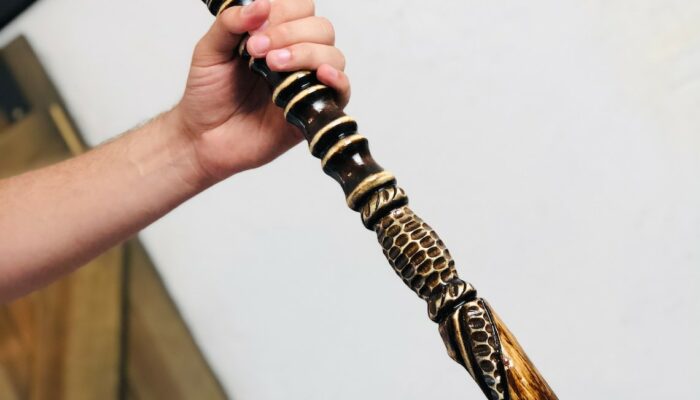
The walking staff—an elongated, often slender stick used to aid ambulation—appears frequently in dream narratives. While its practical function is straightforward, its symbolic resonance is rich and multilayered. In the dream realm, the staff can serve as a metaphor for guidance, stability, spiritual authority, and personal transformation.
Symbolic Themes
Guidance and Stability
Across many interpretive traditions, the staff represents a source of support that helps the dreamer navigate life’s challenges. When the staff is present, it often signals a yearning for structure or reassurance amid uncertainty.
Spiritual and Religious Contexts
Christian Tradition
In Christianity, the shepherd’s staff is a powerful emblem of divine guidance. Psalm 23 famously declares, “The Lord is my shepherd; I shall not want.” The imagery of a shepherd wielding a staff to lead the flock suggests that a dreaming individual may be seeking—or feeling the presence of—spiritual direction.
“He maketh me to lie down in green pastures: he leadeth me beside the still waters.” – Psalm 23:2
Islamic Tradition
Islamic narratives also attribute miraculous qualities to a staff. The story of Prophet Musa (Moses) recounts his staff turning into a serpent and later parting the Red Sea, symbolising divine empowerment and transformation. Consequently, a walking staff in an Islamic‑influenced dream may denote not only guidance but also latent personal power.
Indigenous and Cultural Perspectives
Many Indigenous cultures regard the walking staff as a sacred conduit of ancestral wisdom and a link to the natural world. Dreaming of such a staff can express a desire to reconnect with one’s roots, seek ecological harmony, or pursue knowledge passed down through generations.
| Culture | Primary Meaning | Additional Nuance |
|---|---|---|
| Christian | Divine guidance | Shepherd‑like protection |
| Islamic | Empowerment | Transformation through faith |
| Indigenous | Connection to ancestry | Harmony with nature |
Psychological Interpretation
Jungian Archetype
Carl Jung emphasized the role of symbols as expressions of the collective unconscious. The walking staff can be viewed as an archetype of the “wise guide”—a facet of the Self that offers direction and balance. Its appearance may indicate that the dreamer is engaging with an inner mentor figure, seeking equilibrium between conscious goals and unconscious drives.
Emotional Context Within the Dream
The subjective feeling attached to the staff deepens its meaning. A comforting, sturdy staff suggests confidence and a solid foundation in waking life. Conversely, a heavy or broken staff may reveal feelings of inadequacy, fear of loss, or perceived obstacles on the path ahead.
Interpretive Guidelines
- Identify the staff’s condition: intact, broken, ornate, or plain.
- Observe your emotional response: reassurance, burden, curiosity, or anxiety.
- Note the surrounding dream scene—are you walking a path, climbing, or standing still?
- Consider personal or cultural associations you hold with staffs or similar symbols.
- Reflect on current life challenges; the staff often mirrors the support you seek.
Conclusion
The walking staff, though modest in appearance, carries a spectrum of meanings that converge on themes of guidance, stability, and transformation. Whether interpreted through spiritual lenses, cultural traditions, or Jungian psychology, the staff in a dream invites the sleeper to acknowledge the inner resources and external supports that can help navigate the uncertainties of the future.
FAQ
What does it mean if the walking staff in my dream is broken?
A broken staff often points to feelings of vulnerability or a perceived loss of support in waking life.
Is a walking staff always a positive symbol?
While generally associated with guidance, its meaning depends on context and emotion; a heavy or burdensome staff may signal stress.
Can the walking staff represent personal power?
Yes, especially in traditions where the staff transforms (e.g., Moses’ staff), it can symbolize latent personal power and transformation.




Leave a Reply