
Short Answer
Overview of the Broadcast
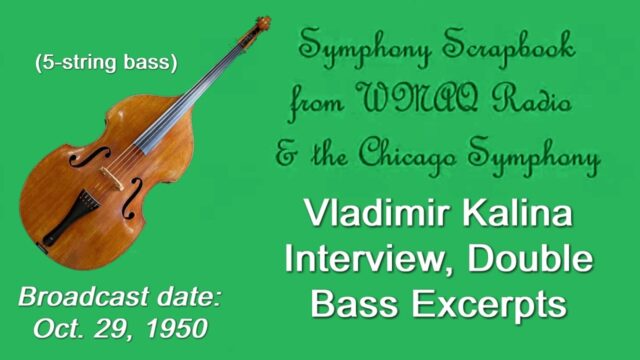
On October 29, 1950, a radio program featuring the Chicago Symphony Orchestra aired a series of segments that served as both musical demonstrations and public relations efforts. Among these recordings is a notable interview and series of excerpts featuring Vladimir Kalina, a double bassist with the ensemble.
Instrumentation and Technical Specifications
A primary point of interest in this recording is the specific configuration of Kalina’s instrument. During this era, the transition between different string materials and counts was a significant topic for orchestral musicians. Kalina’s bass is characterized by a five-string setup, consisting of:
- Four gut strings: Providing the traditional, warm timbre associated with classical double bass performance.
- One wire C string: Utilized to provide a more focused and powerful low-end response, common for the extended range required in late Romantic and Modern orchestral works.
Musical Demonstrations
The broadcast includes several excerpts where Kalina demonstrates the capabilities of the double bass within the context of the orchestral repertoire. The pieces featured in these excerpts include some of the most demanding works in the symphonic canon:
| Composer | Work |
|---|---|
| Ludwig van Beethoven | Symphony No. 5 |
| Karl Goldmark | Rustic Wedding Symphony, Op. 26 (Ländliche Hochzeit) |
| Richard Strauss | Also Sprach Zarathustra |
Historical Significance
These recordings are valuable for musicologists and historians as they capture the specific sonic characteristics of the Chicago Symphony Orchestra’s string section during the mid-20th century. The blend of gut and metal strings represents a pivotal moment in the evolution of the double bass, balancing traditional tonal qualities with the increased volume and projection required for modern concert halls.
FAQ
What was the purpose of the 1950 broadcast?
The program appeared to be part of a series by the Chicago Symphony Orchestra likely intended for public relations and educational purposes.
Which pieces did Vladimir Kalina demonstrate?
He demonstrated excerpts from Beethoven's 5th Symphony, Goldmark's Rustic Wedding Symphony, and Strauss's Also Sprach Zarathustra.




Leave a Reply