
Short Answer
Introduction
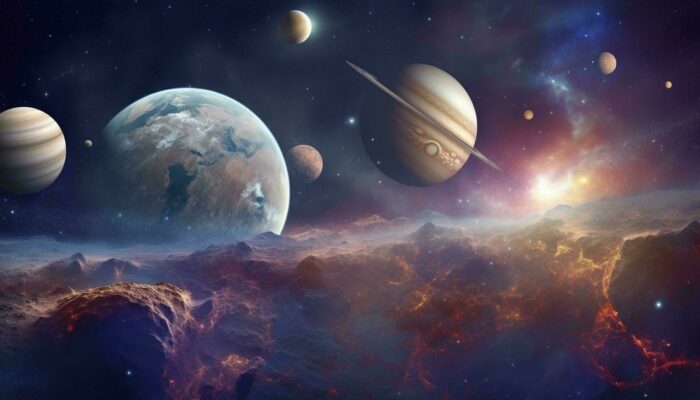
When the night sky or the infinite expanse of space appears in a dream, it rarely serves merely as a backdrop. Such imagery functions as a potent metaphor for the dreamer’s inner world, mirroring aspirations, anxieties, and spiritual longings. By analysing the dream through symbolic, religious, and psychological lenses, a richer understanding of its personal significance can emerge.
Symbolic Interpretation
Space in dreams commonly embodies several inter‑related ideas:
- Freedom and Exploration – a yearning to break free from routine constraints and to venture into new territories, whether literal or figurative.
- Infinite Possibilities – the sense that countless opportunities await, suggesting a period of creative or professional potential.
- Isolation or Emptiness – feelings of loneliness, existential doubt, or emotional desolation that may surface during times of transition.
The specific visual elements—stars, planets, nebulae, or a dark void—along with the dreamer’s emotional tone (awe, fear, serenity) help determine which facet of the symbolism is most salient.
| Space Symbol | Typical Meaning |
|---|---|
| Star‑filled sky | Guidance, hope, or emerging potential |
| Dark void | Feelings of emptiness, uncertainty, or the need for inner clearing |
| Planetary bodies | Specific life domains (e.g., relationships, career) in need of attention |
| Floating in zero‑gravity | Desire for emotional detachment or a sense of being ungrounded |
Spiritual Significance Across Traditions
Christianity
Within Christian symbolism, the heavens represent divine creation and the promise of eternal communion with God. A luminous sky or radiant stars may indicate a search for spiritual purpose, a call to deepen faith, or a perception of divine guidance in one’s life.
Islam
Islamic tradition views the heavens as a manifestation of Allah’s majesty. Dreaming of expansive cosmic vistas can inspire humility, prompting reflection on one’s place within the grand design and encouraging gratitude for divine provision.
Hinduism and Buddhism
Both traditions treat space as a conduit for deeper insight. In Hindu thought, the cosmos intertwines with karma and the cycle of rebirth; an expansive dreamscape may signal contemplation of past deeds and future evolution. Buddhism interprets vast emptiness (śūnyatā) as a reminder of impermanence, encouraging mindfulness and detachment from material attachments.
Psychological Perspective
Jungian View: Carl Jung regarded space as a representation of the unconscious—its depth, mystery, and untapped potential. Encountering a star‑filled sky can signal integration of previously unacknowledged aspects of the self, whereas a dark void may point to feelings of alienation or a need for psychological “clearing.”
Contemporary Research: Modern dream studies link cosmic imagery with heightened emotional states such as awe, curiosity, or anxiety. Researchers suggest that vivid space dreams often arise after exposure to astronomy media, nighttime contemplation of the night sky, or during periods of significant life change.
Common Dream Scenarios and Their Nuances
- Floating or traveling through space – May reflect a desire for freedom, or conversely, a sensation of being unmoored in waking life.
- Observing distant galaxies or nebulae – Suggests curiosity about the future and the unknown, often accompanied by feelings of wonder.
- Being lost in a dark void – Indicates anxiety, existential dread, or a need to confront feelings of emptiness.
- Seeing a bright star or comet – Typically interpreted as a sign of hope, a forthcoming opportunity, or a spiritual message.
Interpretation Tips
- Note the emotional tone of the dream; it often outweighs visual details.
- Identify any personal associations you have with space (e.g., childhood fascination, scientific study, recent movies).
- Consider the current life context—major transitions, creative projects, or periods of isolation can shape the meaning.
- Keep a dream journal to track recurring space motifs and their evolution over time.
Conclusion
Dreams of space function as multifaceted mirrors, reflecting limitless possibility, spiritual yearning, or inner emptiness. By attending to specific details—color, scale, and emotional resonance—individuals can transform these nocturnal visions into valuable insights for personal growth and self‑understanding.
FAQ
What does it mean to dream of a bright star?
A bright star often symbolizes hope, a new opportunity, or a spiritual message guiding the dreamer toward a desired path.
Why do some people feel anxiety when dreaming of a dark void?
A dark void can mirror feelings of uncertainty, isolation, or unresolved emotional issues, prompting the subconscious to process these anxieties.
Can dreaming of space indicate a need for personal growth?
Yes; space imagery frequently reflects the vast, untapped potential of the unconscious, suggesting that the dreamer is ready to explore new aspects of themselves.





Leave a Reply