
Short Answer
Introduction
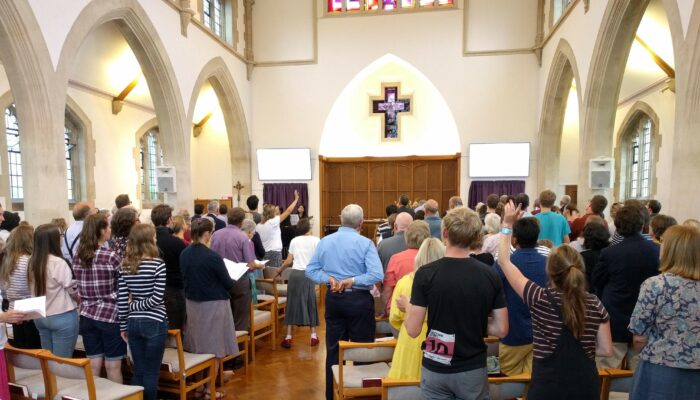
Dreams often act as mirrors of the subconscious, presenting symbols that draw from personal experience, cultural background, and collective archetypes. A church service—whether recognized as a Christian worship gathering, an analogue of Islamic communal prayer, or simply a sacred ritual—appears frequently in nocturnal narratives. Interpreting this motif requires attention to religious context, metaphorical significance, and psychological dynamics.
1. Spiritual Perspectives
Christian Context
In Christianity, a church service represents communal worship, prayer, and the proclamation of doctrine. Dreaming of attending such a service can indicate a desire for spiritual nourishment, a longing to reconnect with faith, or a subconscious call toward repentance. The presence of familiar liturgical elements—hymns, sermons, or the Eucharist—may highlight the dreamer’s need for guidance, forgiveness, or a reaffirmation of moral values.
Islamic Context
While Islam does not feature church services, the parallel of a congregational prayer (e.g., the Friday Jumuʿah) carries comparable symbolism. A dream that mirrors a communal prayer setting can reflect the dreamer’s engagement with the concept of ummah (community), a yearning for spiritual solidarity, or an internal reminder of humility and devotion. The atmosphere of shared worship may underscore the importance of belonging and collective responsibility within the dreamer’s life.
2. Symbolic Interpretation of the Church
Beyond specific religions, the church building itself functions as a potent metaphor. It often stands for a sanctuary—a protected space where the individual confronts existential questions, seeks refuge, or pursues inner peace. Elements of the service—rituals, music, spoken word—symbolize the human quest for meaning, order, and connection with the transcendent.
- Sanctuary: The church as a safe haven from life’s turbulence.
- Ritual: Structured actions that provide a sense of stability and predictability.
- Community: The congregation reflects the dreamer’s desire for belonging or social support.
3. Psychological Analysis
From a Jungian viewpoint, the church can be seen as an archetype of the Self—the integrated totality of consciousness and unconsciousness. Dreaming of a service may signal a stage of individuation, where the dreamer is aligning personal values with a broader, perhaps spiritual, framework. Authority figures present in the dream (priests, imams, or choir directors) often embody internalized moral standards or the dreamer’s relationship with societal norms.
The emotional tone of the dream provides additional clues. A serene, uplifting service suggests hope, renewal, and psychological harmony, whereas a somber or unsettling experience may point to inner conflict, guilt, or unresolved spiritual questions.
4. The Role of Ritual and Structure
The predictable sequence of a church service—opening hymn, reading, sermon, closing prayer—offers a symbolic blueprint for order in an otherwise chaotic world. When this structure appears in a dream, it can reflect the dreamer’s craving for routine, clarity, or guidance during periods of uncertainty. Conversely, a disrupted or chaotic service may mirror feelings of instability or loss of direction.
Conclusion
Dreams of a church service weave together threads of faith, community, symbolism, and psyche. Whether they arise from a specific religious upbringing, a universal archetype, or a personal need for sanctuary, these visions invite the dreamer to explore deeper layers of meaning. By examining cultural context, symbolic content, and emotional resonance, individuals can gain insight into their spiritual aspirations, social connections, and inner psychological landscape.
FAQ
What does it mean to dream of attending a church service?
It often signals a desire for spiritual connection, guidance, or a need to reflect on personal values.
Can a negative experience in a church‑service dream indicate guilt?
Yes, feelings of discomfort or shame during the dream may reflect unresolved guilt or moral conflict.
Do these dreams have the same meaning for non‑religious people?
For non‑religious dreamers, the church usually functions as a metaphor for sanctuary, order, or community rather than a literal religious symbol.




Leave a Reply