
Short Answer
Overview
Dreams that feature religious rituals often carry layered meanings. Among these, the image of witnessing Communion in a church is especially potent, evoking ideas of unity, sacrifice, and spiritual nourishment. This article surveys the primary interpretations offered by theological scholarship, comparative religion, and depth psychology, while also outlining common emotional themes reported by dreamers.
Religious Symbolism of Communion
Christian Context
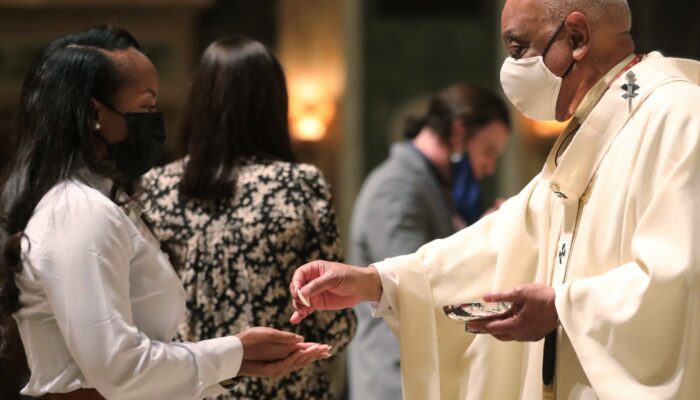
In most Christian traditions, Communion (the Eucharist) commemorates the Last Supper, where believers partake of bread and wine as symbols of Christ’s body and blood. The sacrament emphasizes:
- Communion with the divine – a personal encounter with the sacred.
- Communion with the community – shared participation that reinforces fellowship.
- Remembrance and renewal – a periodic reaffirmation of faith.
Dreaming of this rite may therefore signal a yearning for deeper spiritual connection or a subconscious reminder to engage more fully with one’s faith community.
Broader Religious Parallels
While the Eucharist is uniquely Christian, similar communal rites appear in other faiths. In Islam, the collective prayer (Salat) and gatherings during Ramadan embody the same principles of unity and shared devotion. For believers from non‑Christian backgrounds, a dream of Communion can still represent the universal human desire for collective spiritual experience.
Psychological Interpretations
Freudian Perspective
Sigmund Freud regarded religious symbols as expressions of repressed wishes and unresolved conflicts. A dream of receiving Communion might be interpreted as an unconscious attempt to resolve feelings of guilt, seek parental approval, or restore a sense of inner harmony.
Jungian Perspective
Carl Jung emphasized archetypes and the collective unconscious. The Eucharist can be seen as an archetypal image of the “sacred meal,” representing integration of the self, the merging of opposites (spirit and flesh), and the process of individuation. Jungian analysts often view such a dream as a sign that the psyche is working toward wholeness.
Contemporary Views
Modern dream researchers, such as G. William Domhoff, note that religious imagery frequently reflects waking‑life concerns—recent participation in services, recent readings, or heightened anxiety about belonging. The dream therefore mirrors current mental preoccupations rather than delivering prophetic messages.
Common Themes Reported by Dreamers
- Feeling of calm or peace while observing the ritual.
- Sense of exclusion—watching from a distance without partaking.
- Emotional intensity, often linked to memories of childhood church experiences.
- Questions about personal faith, morality, or life purpose.
Potential Personal Significance
Interpreting the dream requires personal reflection. Consider the following questions:
- Are you currently experiencing a need for community or support?
- Do recent events challenge your spiritual or moral convictions?
- Is there an unresolved relationship that could benefit from reconciliation or shared experience?
Answers to these prompts can help clarify whether the dream urges greater involvement in a faith community, a reevaluation of personal values, or simply a call for emotional nourishment.
Guidance for Reflection
“Dreams are the royal road to the unconscious.” – Carl Jung
To work with this imagery:
- Keep a dream journal and note any emotions attached to the scene.
- Engage in mindful prayer, meditation, or communal activity that resonates with the dream’s theme.
- Discuss the dream with a trusted spiritual advisor or therapist if it provokes strong feelings.
Conclusion
The image of Communion in a church dream weaves together theological symbolism, archetypal depth, and personal circumstance. Whether it points to a desire for spiritual communion, a psychological need for integration, or a cultural echo of recent worship, the dream invites the sleeper to explore connections—both within and beyond themselves.
FAQ
What does it mean if I watch Communion but do not receive it in the dream?
Observing without partaking often reflects feelings of exclusion or a desire to belong to a group you currently feel distant from.
Can this dream indicate a need for personal sacrifice?
Yes, the sacrificial aspect of Communion can symbolize a subconscious prompt to consider what you might be willing to give up for the greater good.
Is the dream relevant if I am not a Christian?
Even without a Christian background, the imagery taps into universal themes of unity, nourishment, and shared spirituality, which can still hold personal meaning.





Leave a Reply