
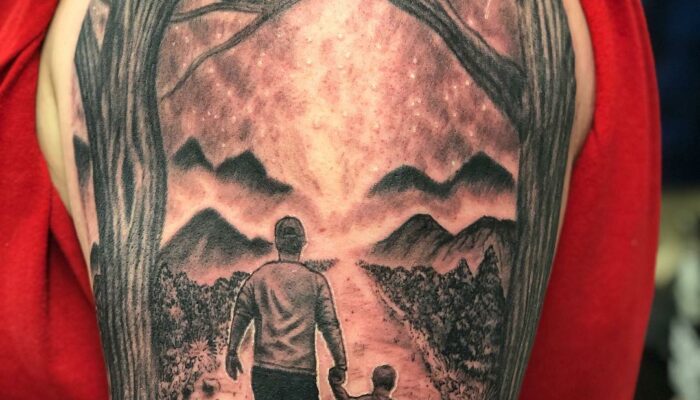
Short Answer
Dreams often act as portals to the subconscious, utilizing elaborate imagery to communicate hidden messages, anxieties, and desires. When a dreamer encounters a father figure adorned with tattoos, the dream weaves together narratives of identity, authority, and personal expression. Because the father typically represents a pillar of guidance and the tattoos represent individual choice, this specific imagery creates a rich tension for analysis.
The Intersection of Authority and Individuality
To understand the dream meaning of a father with tattoos, one can apply a logical syllogism to the symbols present: if a father represents traditional authority and guidance, and tattoos signify individuality and personal history, then a tattooed father symbolizes a fusion of paternal influence and personal autonomy.
This imagery suggests that authority is not merely a static set of traditions passed down through generations, but is instead an evolving expression of personal choices and societal influences. It prompts the dreamer to reflect on how their own identity is shaped by the balance between familial expectations and the desire for self-expression.
Spiritual and Cultural Perspectives
The interpretation of tattoos in dreams varies significantly depending on the cultural and spiritual lens applied:
Biblical and Christian Views
In certain Christian contexts, where the body is viewed as a temple, tattoos can be interpreted through the lens of vanity or rebellion. However, they can also be seen as a testament to a personal journey. For example, if the father in the dream has crosses or scripture inked on his skin, it may signify a deep spiritual commitment and a search for divine connection within the father-child dynamic.
Islamic Perspectives
From a traditional Islamic perspective, tattoos are generally discouraged as they are seen as alterations to God’s creation. Consequently, dreaming of a father with tattoos in this cultural context may indicate an internal struggle between familial expectations and individual desires. This dissonance often reflects a generational challenge: reconciling strict traditional values with a contemporary sense of identity.
Indigenous and Tribal Frameworks
In many other cultures, tattoos serve as rites of passage, markers of achievement, or symbols of communal belonging. In these instances, a father with tattoos represents intergenerational knowledge and pride. The tattoos act as a visual narrative of the father’s legacy, offering the dreamer inspiration to craft their own life story while honoring their ancestral roots.
Psychological Analysis
Psychology offers two primary frameworks for interpreting this specific dream imagery:
Freudian Theory: Repression and Rebellion
Sigmund Freud posited that dreams are windows into repressed desires. In this view, the father figure embodies the “Superego”—the source of rules and societal norms. The tattoos may symbolize a repressed urge for rebellion or a need for personal autonomy. Dreaming of a tattooed father might therefore reflect a tension between the dreamer’s desire to adhere to paternal guidance and their yearning to break free from restrictive molds.
Jungian Theory: Archetypes and the Shadow
Carl Jung focused on universal archetypes. The Father Archetype embodies protection and law, while the tattoo can represent the integration of the “Shadow Self”—the hidden, often ignored parts of the psyche. A dream featuring a tattooed father may be an invitation to confront the complexities of one’s own nature, encouraging a journey toward self-acceptance and psychological wholeness.
Contemporary Significance
In modern society, tattoos have largely transitioned from stigmatized marks to vibrant symbols of individuality. This cultural shift makes such dreams particularly relevant for younger generations. A father with tattoos may represent a more dynamic, evolving relationship between parent and child, signaling an acceptance of unique identities within the family structure.
As society becomes more eclectic, these dreams may evoke a desire to honor one’s roots while simultaneously embracing a hybrid identity, acknowledging that we are shaped by those who preceded us but are free to define our own paths.
Summary of Interpretations
| Perspective | Key Meaning | Emotional Tone |
|---|---|---|
| Psychological (Freud) | Conflict between authority and autonomy | Tension/Rebellion |
| Psychological (Jung) | Integration of the Shadow self | Discovery/Wholeness |
| Traditional/Religious | Struggle with norms or spiritual markers | Conflict/Devotion |
| Cultural/Tribal | Lineage, pride, and shared history | Respect/Connection |
“Dreams are the touchstones of sanity.” — Carl Jung
Ultimately, the dream meaning of a father with tattoos is a multifaceted tapestry. Whether it signifies a clash of values or a bridge between generations, it serves as a catalyst for the dreamer to explore their own journey toward authenticity and self-discovery.
FAQ
Does dreaming of a father with tattoos mean my father is changing?
Not necessarily. Dreams often reflect the dreamer's perception of the person or what that person represents (authority, guidance) rather than the actual person's current state.
What if the tattoos in the dream are scary or dark?
Dark or frightening imagery often relates to the 'Shadow' aspect of psychology, suggesting unexplored fears or repressed emotions regarding paternal influence.
Is this dream a sign of rebellion?
It can be. Depending on the context, it may highlight a subconscious desire to deviate from traditional family paths to find a unique identity.




Leave a Reply