
Short Answer
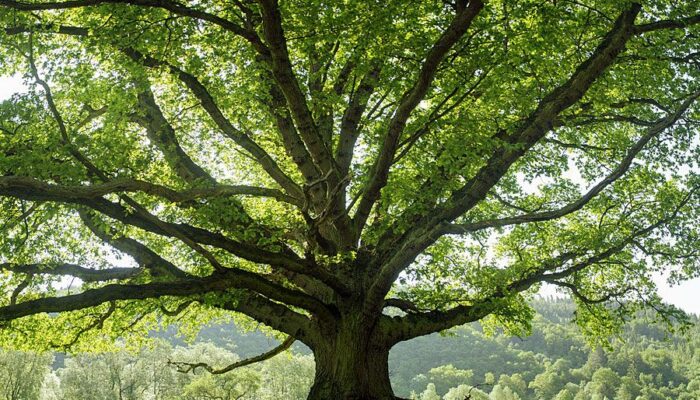
Throughout the history of human symbolism, trees have stood as enduring emblems of life, growth, and resilience. From the ancient wisdom preserved in global cultures to modern psychological frameworks, the significance of trees is multilayered and profound. Whether appearing as a towering oak or a delicate blossom, trees in our subconscious serve as mirrors to our internal state and spiritual journey.
The Interpretation of Trees in Dreams
In the nuanced tapestry of the dreaming mind, trees manifest as potent symbols deeply embedded in the subconscious. Generally, a tree reflects the psyche’s search for stability, nourishment, and personal evolution. Because a tree connects the deep earth to the high sky, it often represents the bridge between the conscious and unconscious mind.
Common Tree Scenarios and Meanings
- Robust and Healthy Trees: Dreaming of a strong oak or a lush canopy often signifies a burgeoning sense of inner strength, confidence, or a call to embrace one’s ancestral roots.
- Wilting or Dead Trees: Conversely, a dying tree may evoke feelings of vulnerability, emotional exhaustion, or a fear of impending loss and stagnation.
- Blossoming Trees: A cherry or apple tree in bloom typically symbolizes renewal, hope, and the arrival of new beginnings.
- Bare Winter Trees: A tree stripped of its leaves may indicate a period of desolation, a need for introspection, or the shedding of old habits to make room for future growth.
Note: Individual experiences heavily influence these interpretations; the personal context of the dreamer is integral to deciphering the specific meaning.
Logical Frameworks: Syllogism and Symbolism
Syllogism, a form of deductive reasoning, can be employed to logically unravel the intricate web of a tree’s symbolism. By establishing a logical premise, we can understand why the tree is a universal symbol for transformation:
Premise A: All living entities undergo cycles of growth and transformation.
Premise B: Trees are living entities.
Conclusion: Therefore, trees epitomize the very essence of change and evolution in life.
This framework illustrates that just as trees weather the changing seasons, individuals navigate the fluctuations of human experience. The tree becomes a logical metaphor for the universal truth that change is an intrinsic part of existence.
Symbolic and Spiritual Perspectives
The spiritual significance of trees resonates profoundly across diverse religious and cultural landscapes, often serving as a link between the mundane and the divine.
Christian Biblical Context
In Christian tradition, trees are vital metaphors within sacred texts. The Tree of Life, described in Genesis, represents eternal life and divine wisdom, symbolizing the connection between humanity and the Creator. Furthermore, imagery of trees bearing fruit often emphasizes the rewards of righteous living and the importance of spiritual productivity.
Islamic Interpretation
In Islamic tradition, trees are often viewed as manifestations of God’s mercy and benevolence. The Qur’an utilizes trees to illustrate guidance and provision. In contrast, the Tree of Zaqqum serves as a stark warning, representing the consequences of wickedness. Thus, trees in an Islamic context highlight the dichotomy between piety and transgression.
Global and Ancient Traditions
| Culture/Mythology | Symbolic Tree | Key Meaning |
|---|---|---|
| Norse | Yggdrasil | The World Tree; interconnectedness of all nine realms. |
| Native American | Various Sacred Trees | Ancestral wisdom, protection, and guidance. |
| Buddhism | Bodhi Tree | Enlightenment and spiritual awakening. |
Psychological Dimensions of Trees
From a psychological perspective, trees denote various aspects of emotional health and the structure of the human experience. Carl Jung, the founder of analytical psychology, frequently utilized the tree as a symbol of the Self.
The Jungian Interpretation
According to Jungian theory, the different parts of the tree correspond to different layers of the psyche:
- The Roots: Represent the foundation of the personality and the unconscious depths.
- The Trunk: Represents the ego and the strength of the individual’s current state.
- The Branches: Signify aspirations, ambitions, and the reach toward self-realization.
Beyond interpretation, the act of planting or caring for trees can be a therapeutic endeavor. This process manifests a deep-seated desire for security and growth, fostering a connection to the earth that can alleviate anxiety and promote mindfulness.
Conclusion
Trees emerge as multifaceted symbols that bridge the gap between the physical and metaphysical. Whether they appear as abstract guides in our dreams, logical proofs of evolution, or divine emblems in religious texts, they remain powerful conduits of meaning. By analyzing the imagery of the tree, we gain a deeper understanding of our own journeys through the myriad experiences that constitute human life.
FAQ
What does it mean if I dream of a tree losing its leaves?
This often symbolizes a period of transition, letting go of the old, or a feeling of loss and vulnerability.
Why are trees so common in dreams?
Trees are universal symbols of life and structure, making them ideal archetypes for the subconscious to represent personal growth and stability.
Does the type of tree matter in a dream?
Yes, the species and condition of the tree (e.g., a fruitful apple tree vs. a dead pine) can significantly alter the interpretation.


Leave a Reply