
Short Answer
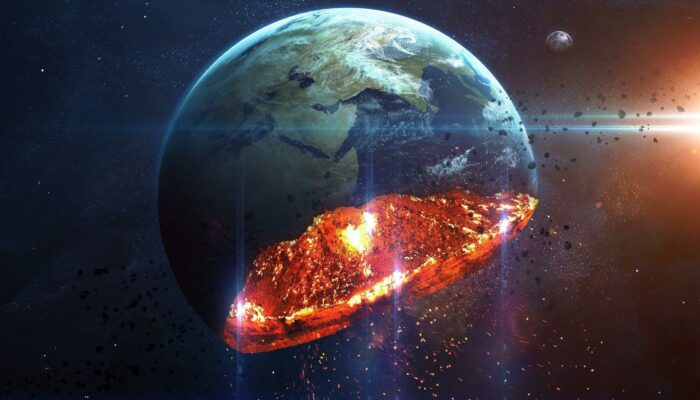
Expectations of the future often shape our present-day experiences, sometimes manifesting in dreams that grapple with profound themes, such as the concept of a world ending. Dreams of an apocalyptic nature can elicit a plethora of emotions, ranging from fear to relief, often revealing deeper psychological and spiritual reflections on our existence.
The Symbolic Nature of Apocalyptic Dreams
In the realm of dream analysis, the world ending symbolizes more than just physical annihilation; it represents a culmination of various existential concerns. From a philosophical standpoint, these dreams often operate on a cycle of destruction and rebirth. If change is constant and the universe is ever-evolving, then the concept of an ending is intrinsically linked to new beginnings.
Consequently, dreams representing the end of the world may actually signify personal transformation and renewal. They often serve as a mental culmination of anxieties regarding the future, reflecting the struggle to navigate a tumultuous world filled with uncertainties.
Spiritual and Religious Interpretations
The meaning of a world-ending dream varies significantly across different religious and philosophical paradigms, often reflecting the dreamer’s internal moral compass.
Christian Perspectives
In Christianity, the book of Revelation describes an end-times scenario involving significant tribulation followed by divine restoration. Dreaming of such an apocalypse might evoke feelings of judgment or moral reckoning. This can symbolize:
- Inner conflicts regarding one’s spiritual journey.
- The struggle between good and evil.
- A divine call to introspection and alignment with spiritual values.
Islamic Perspectives
In Islamic theology, eschatology emphasizes the Day of Judgment, or Yawm al-Qiyāmah, characterized by resurrection and accountability. Dreams of world-ending scenarios in this context may serve as:
- Powerful reminders of the impermanence of earthly life.
- Prompts for self-improvement and humanitarian action.
- Reinforcements of communal responsibility and cosmic order.
Indigenous and Nature-Based Frameworks
In various indigenous cultures, the end of the world is often viewed as part of nature’s cyclical patterns. In this milieu, these dreams may signal a calling to reconnect with the Earth. Dystopian landscapes in dreams may reflect collective fears surrounding climate change and societal decay, highlighting a subconscious need for environmental stewardship.
Psychological Analysis
From a psychological perspective, the implications of dreaming about the world ending are profound and often rooted in the dreamer’s current mental state.
Freudian and Jungian Theory
Sigmund Freud posited that dreams are manifestations of repressed desires and anxieties. Within this framework, apocalyptic scenarios may reflect an underlying fear of loss of control in one’s waking life. Such dreams act as coping mechanisms, allowing the dreamer to confront deep-seated anxieties within a safe, subconscious environment.
Carl Jung’s notion of the collective unconscious suggests that these dreams may mirror shared societal fears and aspirations, connecting the individual experience to a broader human narrative of crisis and rebirth.
Personal Identity and Transition
Beyond global anxiety, these dreams often highlight a struggle with personal identity. An individual undergoing a significant life transition—such as a career change, divorce, or relocation—may experience dreams of devastation as a metaphorical articulation of the turmoil within their psyche. These dreams provide a fertile ground for self-exploration, revealing layers of meaning that remain hidden during waking hours.
Conclusion
The interpretation of a world-ending dream encompasses a myriad of dimensions, from the theological and cultural to the psychological. As humanity navigates an increasingly complex reality, such dreams serve as poignant reminders to embrace change rather than resist it. Ultimately, dreaming of an apocalypse can be construed as a profound invitation: to confront the past, assess the present, and redirect expectations toward a future that is hopeful and transformative.
FAQ
What does it mean when I dream the world is ending?
Typically, it symbolizes a major life transition, personal transformation, or underlying anxiety about a lack of control in one’s waking life.
Is dreaming of an apocalypse a bad omen?
Not necessarily. In many psychological and spiritual frameworks, an ending represents the clearing of the old to make way for a new beginning.
Why do I feel relief in a world-ending dream?
Relief may indicate a subconscious desire to escape current stressors or a readiness to let go of a burdensome phase of life.
FAQ
What does it mean to dream that the world is ending?
Dreaming of the world ending typically symbolizes major life transitions, a feeling of loss of control, or a psychological need for renewal and personal transformation.
Are world-ending dreams always a bad sign?
No. While they can stem from anxiety, they often represent the ‘end’ of an old phase of life to make room for a new beginning.
How do different religions interpret apocalyptic dreams?
Christianity may view them as a call for moral reckoning, while Islamic theology may see them as a reminder of life’s impermanence and accountability.
FAQ
What does it mean to dream that the world is ending?
Dreaming of the world ending typically symbolizes a major life transition, a feeling of loss of control, or a psychological need for renewal and transformation rather than a literal prediction of doom.
Why do I feel relief in a world-ending dream?
Feeling relief may suggest a subconscious desire to escape current stressors or a longing for a ‘fresh start’ by clearing away existing burdens.
Are world-ending dreams linked to anxiety?
Yes, according to psychological theories like those of Freud and Jung, these dreams often reflect repressed anxieties, societal fears, or personal identity struggles.
FAQ
What does it mean to dream that the world is ending?
Dreaming of the world ending typically symbolizes a major life transition, a feeling of loss of control, or a psychological need for renewal and transformation rather than a literal prediction of doom.
Why do I feel relief in a world-ending dream?
Feeling relief may suggest a subconscious desire to escape current stressors or a longing for a ‘fresh start’ by clearing away existing burdens.
Are world-ending dreams linked to anxiety?
Yes, according to psychological theories like those of Freud and Jung, these dreams often reflect repressed anxieties, societal fears, or personal identity struggles.




Leave a Reply