
Short Answer
Introduction
The number 23 has long fascinated scholars, mystics, and everyday observers alike. Whether spotted on a clock, a license plate, or within a dream, its recurrence often prompts questions about hidden significance. This article surveys the principal interpretations of 23 across several domains: dream symbolism, numerology, cultural and religious traditions, and modern psychological perspectives.
Number 23 in Dream Interpretation
In the language of dreams, numbers act as condensed symbols that can convey complex emotional states. When the digit 23 surfaces, it is frequently linked to moments of decision‑making and synthesis.
- Crossroads and Choices: The combination of 2 (duality, partnership) and 3 (creativity, manifestation) may suggest that the dreamer stands at a junction where collaborative effort meets the birth of new ideas.
- Evaluation of Relationships: The presence of 23 can invite reflection on existing alliances, urging the sleeper to consider compromises, support structures, or the need to nurture connections.
- Integration of Thought and Action: Psychodynamic theory views numbers as extensions of unconscious content; 23 may therefore symbolize the integration of intellectual planning (2) with expressive execution (3).
While individual experience shapes meaning, these themes recur in many anecdotal reports and in scholarly analyses of dream content.
Numerological Analysis
Numerology treats each number as possessing a distinct vibrational frequency. The number 23 reduces to 5 (2 + 3 = 5), a digit associated with change, freedom, and adaptability.
“The energy of 5 is restless, seeking variety and movement.” – David A. Phillips, The Complete Book of Numerology
In this framework, 23 can be interpreted as a catalyst for transformation, urging the individual to embrace flexibility and to pursue novel experiences. Chaldean numerology specifically labels 23 as a “number of great strength and change,” while Pythagorean traditions connect it to harmony and creative expression.
Cultural and Religious Contexts
Across civilizations, the number 23 has acquired distinct symbolic layers:
- Christianity: The 23rd Psalm, “The Lord is my shepherd; I shall not want,” is often cited as a source of comfort and divine guidance, linking the number to spiritual protection.
- Islam: Islamic tradition notes that Prophet Muhammad received revelations over a period of 23 years, framing the number as a bridge between divine communication and human reception.
- Ancient Greece: Within Pythagorean thought, 23 was associated with artistic harmony and the balance of opposites.
These associations illustrate how numerals can acquire theological resonance, shaping collective belief systems.
Psychological Perspectives and Popular Culture
Modern psychology explains the heightened awareness of 23 through the principle of selective attention and the human tendency toward pattern recognition. When a number is noticed once, the brain is primed to notice it again—a phenomenon sometimes called the “frequency illusion” or “Baader‑Meinhof effect.”
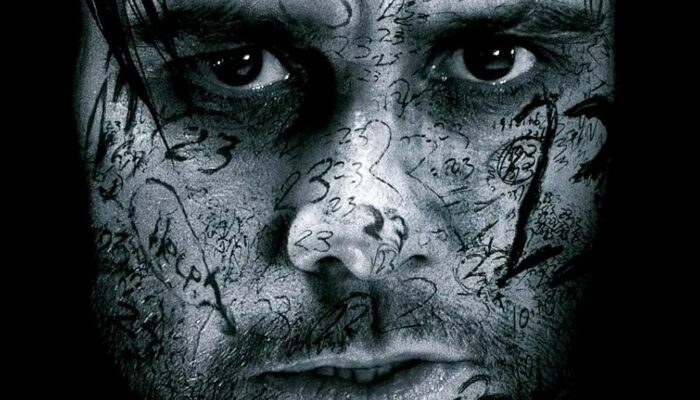
In popular media, the number has been dramatized as an object of obsession. The 2007 film The Number 23 starring Jim Carrey portrays a protagonist whose life unravels after he perceives the digit everywhere, highlighting the thin line between meaningful coincidence and paranoia.
Conclusion
The number 23 serves as a multifaceted symbol that can be read through dream analysis, numerological vibration, cultural mythology, and cognitive psychology. Whether regarded as a simple coincidence or a profound signal, its recurring presence invites individuals to pause, reflect, and consider the deeper narratives that shape their inner and outer worlds.
FAQ
What does it mean when I dream of the number 23?
Dreams featuring 23 often point to a period of decision‑making, urging the dreamer to evaluate partnerships (2) and creative projects (3) in their life.
Is the number 23 considered lucky or unlucky?
Interpretations vary by culture; some view it as a symbol of strength and change, while others associate it with obsession or paranoia, especially after its portrayal in media.
Why do I keep noticing the number 23 in daily life?
The brain’s pattern‑recognition tendency, known as the frequency illusion, makes a once‑noticed number seem to appear more often than it actually does.

Leave a Reply