
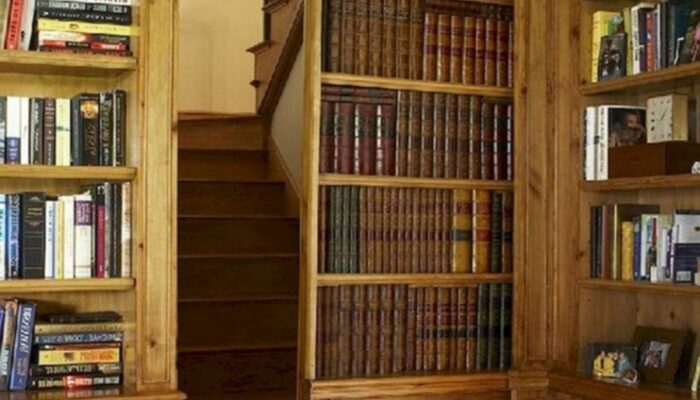
Short Answer
Introduction to the Symbolism of Secret Rooms
Dreams are often enigmatic, shrouded in mystery and rich with symbolism, reflecting our innermost thoughts, desires, and fears. Among the various motifs that emerge in the dreamscape, few are as intriguing as the concept of secret rooms. These concealed spaces within our dreams can evoke a spectrum of interpretations, warranting an exploration into their meanings across different cultural, psychological, and spiritual dimensions.
The notion of secret rooms captures our collective imagination, often perceived as repositories of hidden truths or suppressed emotions. In the language of the subconscious, these clandestine spaces may symbolize aspects of ourselves that remain undisclosed or yet to be acknowledged. Such rooms can represent unexamined possibilities, latent abilities, or even buried traumas that demand our attention.
Psychological Perspectives: The Mind’s Hidden Chambers
From a psychological standpoint, discovering a secret room often signifies a journey of self-exploration and the uncovering of previously unknown facets of one’s identity.
Freudian Theory and Repression
Sigmund Freud’s theories emphasize the repressed elements of the psyche. He suggested that concealed locations in dreams often symbolize hidden desires or suppressed memories. When an individual dreams of secret rooms, they may be grappling with unresolved issues or feelings of inadequacy. This motif can signal a psychological need to confront these innermost thoughts to facilitate healing and acceptance.
Jungian Archetypes and the Shadow
Carl Jung expanded on the concept of the unconscious by introducing the ‘Shadow’—the part of our personality containing qualities we deem undesirable or ignore. A secret room may represent this Jungian shadow, imbued with emotions and experiences we choose to avoid. Engaging with these hidden spaces is considered essential for achieving individuation and personal wholeness.
Spiritual and Religious Interpretations
Secret rooms often traverse the boundary between conscious awareness and the subconscious mind, evoking a sense of curiosity or urgency. Depending on the dreamer’s faith, these rooms can take on sacred meanings.
Biblical and Christian Perspectives
In Christian biblical interpretations, secret rooms may symbolize the hidden aspects of one’s spirituality. The Gospel of Matthew (6:6) posits that one should pray in secret, suggesting that private communication with the divine is paramount. In this context, the secret room embodies:
- A Sacred Sanctuary: A private space for solace and connection with God.
- The Inner Heart: A metaphor for the soul’s residence where deeper spiritual revelations await.
- Hidden Treasures: Faith-based insights accessible only through introspection and communion.
Islamic Traditions and Inner Purity
In Islamic tradition, the heart is viewed as the seat of knowledge and spirituality. Discovering a secret room in a dream may insinuate the importance of seeking inner purity and wisdom. Given the Quranic emphasis on self-reflection, such a room might signify a threshold to personal growth, urging the dreamer to confront inner conflicts and pursue repentance and forgiveness.
Cultural and Esoteric Meanings
Beyond modern psychology and organized religion, many indigenous and ancient cultures have viewed hidden chambers as gateways.
| Perspective | Symbolic Meaning | Associated Emotion |
|---|---|---|
| Indigenous/Ancient | Doorway to spiritual realms/ancestral wisdom | Reverence, Guidance |
| Esoteric | Duality of the known vs. the unknown | Curiosity, Mystery |
| General Symbolism | Latent talent or forgotten memories | Surprise, Discovery |
In these contexts, secret rooms represent a thin veil separating the material world from the spiritual. They may invoke a connection to ancestral guidance, urging the dreamer to unearth their heritage and honor their origins.
Conclusion: The Path to Self-Discovery
Throughout various cultural lenses, the symbolic essence of secret rooms emphasizes introspection, awakening, and transformation. Recognizing the manifold meanings of these rooms invites a deeper understanding of one’s own psyche and spiritual journey.
“To encounter a secret room within the dreamscape is akin to discovering a hidden wellspring of insights that beckons exploration.”
By delving into these secret spaces, one may embark on a lifelong journey of self-discovery, forging connections between the tangible and intangible realms of existence. Embracing the opportunity to unearth the wisdom that lies within the shadows of your dreams is a venture into the profound depths of the self.
FAQ
What does it mean if I find a secret room in my house during a dream?
It typically symbolizes the discovery of new talents, suppressed emotions, or forgotten memories that you are now ready to confront.
Is dreaming of a secret room always positive?
Not necessarily. If the room feels claustrophobic or scary, it may represent fears or traumas you have been avoiding. If it feels wondrous, it suggests positive growth.
How does the 'Shadow' relate to secret rooms?
According to Carl Jung, the secret room acts as a physical manifestation of the Shadow—the place where we store the parts of ourselves we don't want the world (or ourselves) to see.




Leave a Reply